
Fortress Saga: Idle AFK RPG
CookAppsSimulation
4.62.82K Reviews
- Version
- 2.1.02
- Installs
- 1.00M
- Age Rating
- Everyone 10+
Screenshots
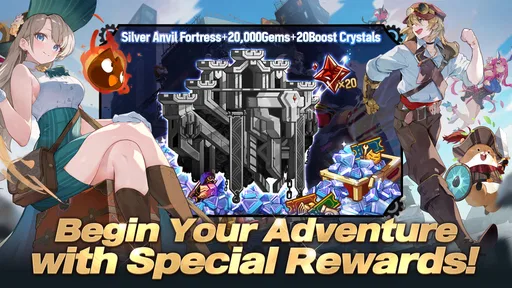
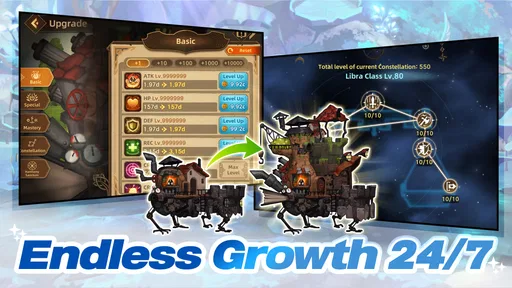
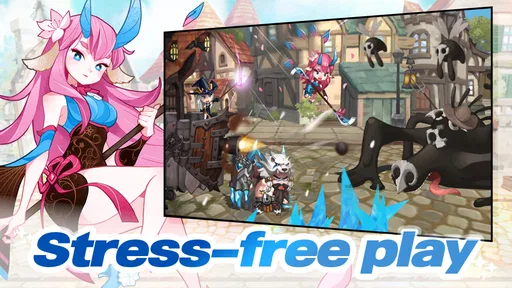
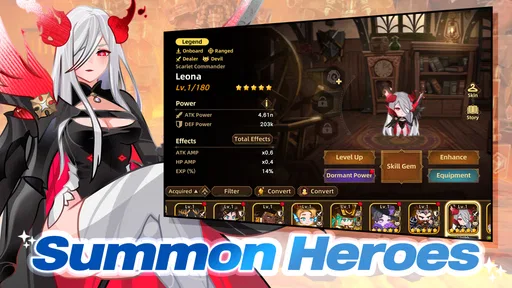
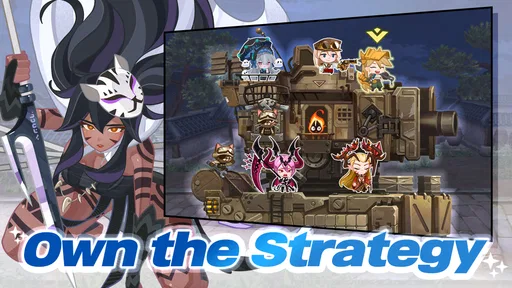
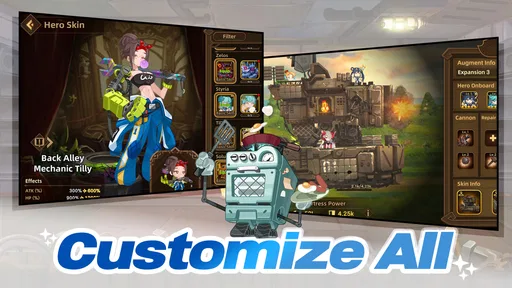
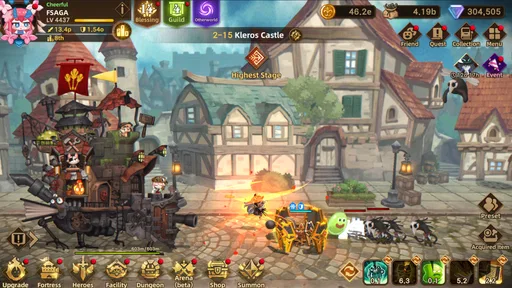

Our Review of Fortress Saga: Idle AFK RPG
 Analysis by Appyee
I usually judge an idle RPG by whether its strategy still matters when I’m not watching every battle. Fortress Saga: AFK RPG makes that question central: I can set up a hero team, let automated fights run, and return later to continued progress. That rhythm is appealing when I want a game I can check in on rather than one that demands a long, uninterrupted session, though it won’t suit anyone looking for constant hands-on combat.
It’s a free simulation game from CookApps, with a 4.6 average from around 161,000 ratings and over a million installs. The game is rated Everyone 10+, and its current version is 2.0.41. Those details put it in the familiar mobile idle-RPG space, but the way I’d recommend approaching it is as a game of small decisions and regular check-ins, not as a substitute for a more active, action-focused RPG.
How the current game fits an everyday routine
I find this game fits best into the small pauses that already happen in a day: I can open it, check what my team has been doing, and decide on one useful adjustment before putting my phone away. That routine works when I want progress without committing to a long session, but it also makes patience part of the appeal. The next section looks at what that short-visit rhythm asks of me in practice.
A team-building loop built for short visits
The main appeal is the contrast between preparation and execution. I choose heroes and arrange a team, then let the battles play out automatically. That means the interesting choice often comes before a fight: which combination to use, and whether a team that worked earlier still fits the challenge in front of me. The game is approachable if I’m new to RPGs, while collecting more heroes gives team setup room to become a longer-term consideration.
The AFK reward system is a practical fit for a busy day. I might check in before work, leave the game alone while I handle other things, and come back later to collect progress and decide what to adjust next. That’s a more comfortable routine than a game that expects me to stay on screen through every encounter. It also changes what “playing well” means: I get more value from making a sensible setup and returning consistently than from tapping through battles without a plan.
Where its strategy has limits
Automated combat is both the convenience and the trade-off. I don’t have to control every move, but I also get less moment-to-moment influence than I would in a real-time action RPG. If your favorite part of a battle is dodging, timing attacks, or responding manually to an enemy, this format may feel distant. I’d choose an action RPG for that kind of involvement; I’d choose this one when I want roster decisions to matter without turning a quick check-in into a full session.
A useful habit is to treat a failed push as information about the lineup rather than a cue to repeat the same attempt immediately. I’d review the heroes I have available, change the team deliberately, then give the game time to produce more progress before checking again. That approach makes the idle structure feel purposeful. It also helps avoid the common frustration of expecting a small burst of activity to solve a problem that is really about team composition or gradual development.
Presentation and day-to-day feel
The art is colorful, and the character and environment designs give the game a lighter, inviting look. I found that visual style a good match for the automatic battles: there’s enough movement to make fights readable and pleasant to watch, without making the game feel like it needs my full attention at all times. The animations also help give the heroes some personality, which matters in a game where collecting and arranging a roster are part of the draw.
Still, polished presentation doesn’t change the basic loop. If I’m not interested in assembling a team, checking idle progress, and gradually working through challenges, attractive visuals won’t carry the experience for long. I’d try it for the combination of a roster and low-pressure pacing, not simply because it looks lively in a store preview.
How it compares with other mobile RPGs
Compared with a conventional turn-based RPG, this asks less of me during each battle and places more emphasis on the choices I make around the fight. Compared with a hands-on action RPG, it offers less direct control but is easier to fit around errands, breaks, or a commute. It occupies a useful middle ground for someone who likes collecting heroes and thinking about teams but doesn’t want every session to become a long tactical exercise.
That middle ground is not automatically the best of both worlds. Players who want a deep tactical puzzle in every encounter may prefer a turn-based game with more direct decision-making, while players who want active combat may find automated battles too passive. I’d recommend this to someone who enjoys watching a plan unfold and adjusting it over time, rather than someone who needs every minute of play to involve a fresh input.
What a new player should know about spending
The game is free to start, and in-app purchases range from $0.99 to $99.99 per item. That wide range is a reason to decide on a personal spending limit before browsing purchase options, especially if collecting heroes or speeding progress becomes tempting. I’d begin as a free player and see whether the routine itself is enjoyable before spending; the game’s central appeal is the team-and-idle loop, so paying should be a choice rather than an assumed requirement.
There’s another practical trade-off with idle games: a reward waiting when I return can make a short visit feel productive, but it can also make progress feel slow if I expect constant action. I’d approach rewards as a background benefit, not as a promise that every return will bring a major breakthrough. That expectation makes the pacing easier to enjoy and helps keep purchases from becoming a knee-jerk response to a stalled moment.
Who is likely to enjoy the routine?
I think the game is a strong fit for people who like collecting heroes, trying different team arrangements, and checking in briefly throughout the day. It can work during a lunch break or while waiting for an appointment: I can review progress, make a considered adjustment, and put the phone away. The important point is that the game’s low-attention rhythm is the feature, not a temporary phase before it turns into a fully manual RPG.
I’d suggest skipping it if you dislike automated combat, prefer to finish a complete story chapter in one focused sitting, or don’t enjoy progression that continues in the background. It may also be a poor match if you tend to feel pressured by optional purchases in free games. In those cases, a paid RPG with a more clearly bounded experience, or a combat-focused game with direct control, is likely to feel more satisfying.
What returning players can reasonably expect
The release date is July 18, 2023, and the current version is 2.0.41. That establishes that the game has moved beyond its initial release, but a version number by itself doesn’t tell me which specific systems or balance details changed. For a returning player, I’d treat the current build as the place to reassess the experience rather than assume that a particular feature has been added or altered. If you’ve been away, the practical question is whether the present team-building and idle rhythm still suits you.
Existing players can make that reassessment without rebuilding their whole routine. I’d first look at the heroes already in my roster and identify one clear goal for the next session, such as testing a different lineup or claiming accumulated progress. Keeping the goal small makes it easier to see whether my choices are improving the experience, rather than opening the game, tapping through everything, and leaving without a useful sense of what changed.
Questions worth settling before you commit
A common concern is whether I need to stay online constantly. The AFK system is specifically meant to let heroes continue gathering resources and experience while I’m away, so the game is designed for breaks from active play. That does not make it a purely hands-off experience: I still need to return, make decisions, and engage with the team-building side if I want the strategic layer to matter.
Another question is whether it can be enjoyed without paying. It is free to play, and I would start without purchases to judge the pace for myself. Since optional purchases can speed progression, a player who wants the quickest possible advancement may feel differently from someone happy to let progress take time. I would not treat spending as a prerequisite for discovering whether the basic loop appeals to me.
The minimum operating system is Android 7.1, a useful compatibility point to check before installing. The age rating is Everyone 10+, which gives families a starting reference, though I’d still make my own decision about whether the game’s content and in-app purchase options fit a particular child. Those are more practical checks than assuming that a casual-looking RPG is automatically right for every device or player.
Why Fortress Saga Stands Out
First off, let’s talk about the graphics. The developers have done a stellar job with the design, making it visually appealing without overwhelming your device. The characters and environments are vibrant, and the animations are silky smooth, which is a major plus for a mobile game.
But what really sets Fortress Saga: AFK RPG apart is its blend of strategy and idle gameplay. You can plan out your team’s setup and then let them battle it out without constant micromanagement. It's the perfect balance for those of us who love strategy games but don’t always have hours to dedicate at a stretch.
Gameplay Mechanics
The gameplay is intuitive, even if you're not a seasoned RPG veteran. You start by assembling a team of heroes, each with unique abilities, and then deploy them against waves of enemies. The battles are automated, but don’t let that fool you into thinking it’s all hands-off. Strategy is key, as positioning and team composition can make or break your success. The more you progress, the more heroes you unlock, adding layers to your strategy.
The game also features an AFK (away from keyboard) reward system. This means your heroes continue to gather resources and experience even when you’re not actively playing. It’s a great way to keep progressing without being tethered to your screen 24/7.
Community and Events
One thing I always look for in RPGs is a thriving community, and Fortress Saga doesn’t disappoint. There are plenty of in-game events that encourage interaction with other players. Whether it’s joining a guild or competing in PvP arenas, there’s a strong social element that adds to the overall experience.
Plus, the developers are regularly rolling out updates and events, which keeps the game fresh and exciting. It’s clear they’re committed to maintaining an active player base, which is always a good sign.
Monetization and In-App Purchases
No mobile game is complete without discussing its monetization model. Fortress Saga is free to play, but like many games in the genre, it offers in-app purchases. These are mostly for cosmetic items or to speed up progression. The good news is, you can enjoy the game fully without spending a dime, although spending may enhance your experience.
However, the game doesn’t bombard you with ads or pressure you into buying, which is a refreshing change. It allows you to enjoy the game at your own pace, whether you’re a free player or someone who likes to invest a little cash.
Final Thoughts
In conclusion, Fortress Saga: AFK RPG is a fantastic addition to the mobile RPG scene. It’s perfect for those who enjoy strategic elements but want the flexibility of idle gameplay. The graphics, community engagement, and steady flow of content updates make it a game worth trying.
So, if you’re looking for a game that offers both relaxation and strategic challenges, give Fortress Saga a download. You might just find it’s the perfect game to dive into on your next commute or lazy afternoon.
Verdict
Strengths of Fortress Saga: Idle AFK RPG
- Engaging idle mechanics for casual play.
- Vibrant graphics enhance gameplay experience.
- Strategic team-building options available.
- Frequent updates with new content.
- Generous rewards for daily logins.
Limitations of Fortress Saga: Idle AFK RPG
- Can feel repetitive over time.
- Requires internet connection to play.
- In-app purchases can be pricey.
- Limited character customization options.
- Some tasks require long wait times.
Similar Picks in This Category
View All
Truckers of Europe 3
Wanda Software4.3

Town Building Life Simulator
XGame Global4.2

Fidget Toys Trading・Pop It 3D
Freeplay Inc4.7

Sculpt People
CrazyLabs LTD4.4

Scary Teacher 3D
Z & K Games4.2

Hair Tattoo: Barber Shop Game
CASUAL AZUR GAMES4.3
Frequently Asked Questions
What is Fortress Saga: AFK RPG about?
Fortress Saga: AFK RPG is an engaging idle role-playing game where players build and upgrade their fortress while their heroes battle in real-time. The game combines strategic planning with AFK (Away From Keyboard) mechanics, allowing players to progress even when they’re not actively playing. It offers a rich storyline with diverse characters.
Is Fortress Saga suitable for casual gamers?
Yes, Fortress Saga: AFK RPG is perfect for casual gamers due to its idle mechanics. Players can enjoy steady progress without needing to invest significant time. The game automates battles and resource gathering, enabling players to focus on strategic upgrades and enjoy the storyline at their own pace.
What are the main features of Fortress Saga?
Fortress Saga: AFK RPG boasts various features, including hero collection and customization, fortress building, and strategic combat. Players can engage in both PvE and PvP battles, participate in guilds, and explore an immersive storyline. The game also includes events and challenges to keep the gameplay exciting and rewarding.
Are there in-app purchases in Fortress Saga?
Yes, Fortress Saga: AFK RPG offers in-app purchases. Players can buy resources, premium currency, and special packs to enhance their gaming experience. While purchases can accelerate progress, they are not mandatory, and players can enjoy the game fully without spending money.
What platforms is Fortress Saga available on?
Fortress Saga: AFK RPG is available on both Android and iOS platforms. Players can download the game from the Google Play Store or the Apple App Store. It offers a seamless experience across devices, allowing players to enjoy the game on both smartphones and tablets.
Play our best games!


